
Understanding the difference between physical and chemical changes is a key concept in science education. Children often learn best through hands-on experiences, and fun educational activities make abstract ideas easier to grasp. By incorporating simple experiments into lessons, teachers and parents can show how matter changes its form or composition. Below are engaging activities that help kids clearly understand physical and chemical changes while having fun.
1. Melting Ice vs. Burning Paper
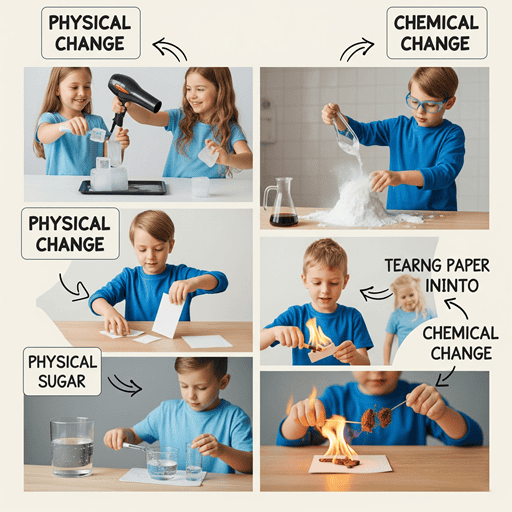
This classic activity demonstrates the difference between physical and chemical changes.
-
Physical Change: Place some ice cubes in a bowl and let them melt. The change is reversible as the water can be frozen again.
-
Chemical Change: Burn a small piece of paper under adult supervision. The paper turns into ash and smoke, which cannot be reversed.
This side-by-side experiment helps kids see how physical changes only alter form, while chemical changes create something new.
2. Baking Soda and Vinegar Volcano
One of the most exciting activities to teach chemical changes is the vinegar and baking soda reaction.
-
Fill a small container with baking soda.
-
Add vinegar and watch the fizzing eruption.
The bubbling happens because carbon dioxide gas is released, showing a clear chemical change. This activity is entertaining and educational, making it a favorite in classrooms and at home.
3. Making Butter from Cream
This simple kitchen experiment shows a physical change.
-
Pour heavy cream into a jar and shake it continuously.
-
After a few minutes, the cream will separate into butter and buttermilk.
This demonstrates that physical changes can alter texture and form without creating new substances. Plus, kids can enjoy tasting the butter afterward.
4. Rusting Iron Nails
Rusting is an everyday example of a chemical change.
-
Place clean iron nails in a cup of water and leave them for a few days.
-
Over time, the nails will develop reddish-brown rust.
This shows how a chemical change takes time and results in a completely new substance.
5. Cutting Fruits vs. Browning Fruits
This activity highlights both types of changes.
-
Physical Change: Cut an apple or banana into slices. The fruit’s shape changes, but it’s still the same fruit.
-
Chemical Change: Leave the slices out in the open air. They will turn brown due to oxidation, which is irreversible.
This comparison makes the concept very relatable for children.
6. Dissolving Sugar vs. Cooking Sugar
-
Physical Change: Stir sugar into water until it dissolves. The sugar molecules mix with water but can be recovered by evaporation.
-
Chemical Change: Heat sugar in a pan until it melts and turns brown (caramelization). This creates a new substance with a different taste and smell.