



You want an academy that gets you job-ready with practical clipping, scissoring, bathing and safe restraint drills plus measurable checkpoints so you know when you’ve mastered a skill dog grooming course. It should teach canine health fundamentals—skin, coat, ears, nails—and when to refer to a vet. Look for breed-specific technique training that protects welfare, small hands-on classes, qualified mentors, industry-grade facilities and business lessons for mobile or salon work. Keep going and you’ll find detailed criteria and next-step options.

Curriculum Essentials: Skills, Health, and Breed-Specific Techniques
When you design a dog grooming curriculum, focus on three pillars: practical skills, canine health knowledge, and breed-specific techniques—each builds on the last so graduates can groom safely and to professional standards. You’ll teach clipping, scissoring, bathing, and safe restraint with clear checkpoints so competence is measurable. You’ll cover skin, coat, ears, nails, and common conditions so you can spot issues and refer appropriately. Breed-specific modules train you to respect conformations and aesthetic standards without compromising welfare. Include grooming psychology so you understand behavior cosmos pet universe, stress signals, and how to calm dogs confidently. For freedom-minded students, add mobile grooming logistics and client communication, showing how to operate independently and build a sustainable business while maintaining professional ethics and animal-first care.
Hands-On Training and Class Size Considerations
Because real skill comes from doing, hands-on training must form the core of your program and be structured so every student practices key techniques repeatedly under close supervision. You’ll want small class sizes that let you handle live models frequently, so you build confidence and speed without feeling crowded. Aim for practical sessions where you rotate through stations — bathing, clipping, scissoring, and finishing — to maximize repetition and variety. Mobile clinics complement on-campus practice by exposing you to different environments and client interactions, sharpening adaptability. Keep cohorts tight enough for meaningful feedback but large enough to foster peer learning and scheduling flexibility. That balance gives you freedom to refine technique, develop workflow, and graduate ready to work independently.
Instructor Qualifications and Mentorship Opportunities
Although hands-on practice makes the program work, instructors make it worth keeping; you’ll want teachers who combine accredited certifications, years of professional grooming experience, and proven teaching ability. You should expect certified instructors who stay current with industry standards and model safe, efficient techniques. Look for instructors who assess your strengths, set clear skill milestones, and give honest, actionable feedback so you gain autonomy quickly. Mentorship programs matter: one-on-one follow-up, job-placement guidance, and short-term externships speed your shift to freelance or salon work. Ask how mentors match personalities and career goals, and whether they offer post-graduation check-ins. Choose a school where instructors and mentors treat you like a future professional, not just a student, so you leave confident and independent.
Facilities, Equipment, and Safety Standards
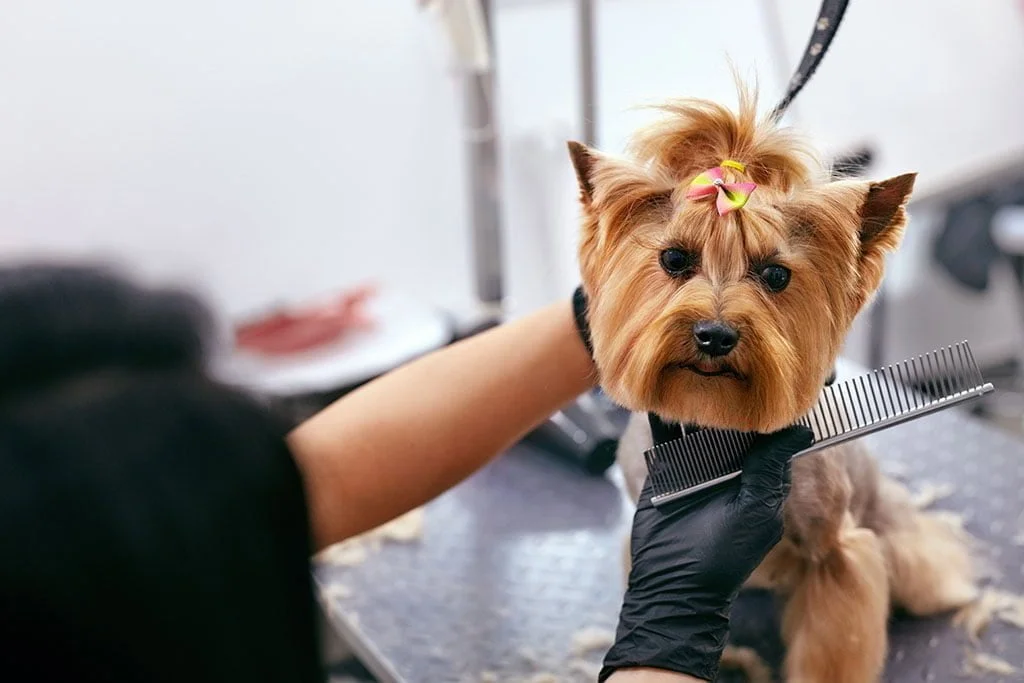
Good instructors are only part of the equation; you also need a workspace and tools that reflect professional standards. You’ll want a facility with a modern layout that flows—separate bathing, drying, grooming, and handling zones so dogs move calmly and you teach efficiently. Equip stations with professional tubs, adjustable tables, and quality clippers so students learn on industry-grade gear. Prioritize clear chemical storage with labeled, ventilated cabinets and MSDS access to protect people and pets. Implement non-slip flooring, easy-to-clean surfaces, and secure dog restraint systems to minimize stress and injury. Regular maintenance schedules, calibrated tools, and visible safety protocols teach responsibility. When your environment mirrors true shop standards, students gain practical freedom to work confidently and safely.
Career Support, Internships, and Business Training
Moving from student to professional takes planning and real-world experience, so we build career support, internships, and business training into every program. You’ll get focused job placement assistance, resume and interview coaching, and a clear pathway to work in salons or start your own mobile or freelance business. Internships pair you with experienced groomers so you practice techniques, scheduling, and client communication under supervision. Business modules cover pricing, basic accounting, marketing, and legal considerations so you can design a life with more control and flexible hours. We help you craft a professional brand, set realistic goals, and network with local employers. By the time you graduate, you’ll be ready to earn, manage clients, and run a sustainable grooming practice.
Conclusion
You’re ready to choose a grooming academy that sets you up for success. Look for a curriculum that balances core skills, health knowledge, and breed-specific techniques, paired with ample hands-on time and small classes. Prioritize instructors with real-world experience and mentorship opportunities, plus clean facilities, up-to-date equipment, and strict safety protocols. Finally, pick a school offering internships, career support, and business training so you can confidently launch your grooming career.